
Call center monitoring is the process of observing, measuring, and analyzing contact center performance. By using real-time dashboards, quality reviews, call recordings, and customer experience metrics, managers can improve service quality, agent productivity, and customer satisfaction. This article explains the meaning of call center monitoring, its key metrics, tools, and best practices.
What Is Call Center Monitoring?
Call center monitoring includes the activities used to evaluate calls, agent performance, waiting queues, service quality, and customer experience. Monitoring may happen in real time or through scheduled reports and quality reviews.
The Main Purpose of Monitoring
Monitoring is not simply a way to supervise employees. Its real purpose is to identify problems, improve processes, coach agents, and create a more consistent customer experience.
Why Is Call Center Monitoring Important?
A contact center is often one of the most direct points of interaction between a customer and a business. Long waits, inaccurate answers, and unnecessary transfers can damage trust. Regular monitoring helps organizations detect and correct problems before they become larger service issues.
Key Benefits
Higher customer satisfaction
Shorter waiting times
Improved agent performance
Fewer repeat calls
Higher first-call resolution
Data-driven decision-making
Key Call Center Monitoring Metrics
Average Speed of Answer
Measures how long callers wait before an agent answers.
Average Handle Time
Includes talk time, hold time, and after-call work.
Call Abandonment Rate
Shows the percentage of callers who disconnect before receiving assistance.
First-Call Resolution
Measures how many customer issues are resolved without a repeat contact.
Service Level
Shows the percentage of calls answered within a target time.
Customer Satisfaction
Often measured through post-call surveys and CSAT scores.
Call Quality Score
Evaluates accuracy, tone, compliance, empathy, and problem-solving skills.
Call Center Monitoring Methods
Real-Time Dashboards
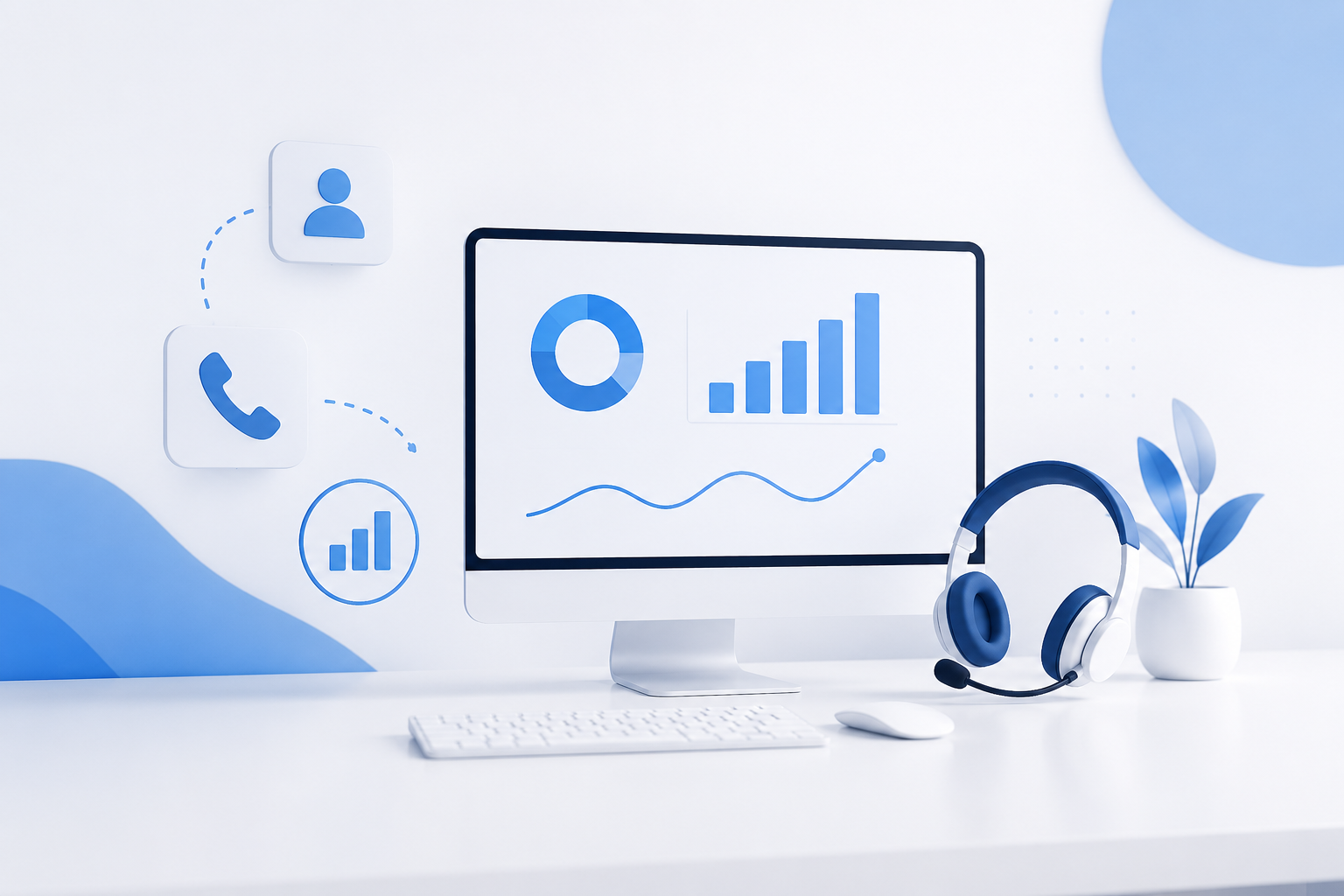
Display incoming calls, queue size, available agents, waiting time, and service level.
Call Recording and Quality Review
Allow managers to review selected calls for coaching, compliance, and quality improvement.
Live Call Monitoring
Enables supervisors to listen to active calls and support agents when necessary.
AI-Powered Conversation Analytics
Automatically analyzes keywords, sentiment, call reasons, and compliance with scripts.
Periodic Performance Reports
Compare teams, shifts, agents, and time periods.
The Role of AI in Contact Center Monitoring
Artificial intelligence can analyze a much larger percentage of conversations than manual quality reviews. It can detect customer sentiment, identify call topics, flag risky interactions, and provide real-time suggestions to agents.
Major AI Applications
Automated quality scoring
Detection of high-risk conversations
Identification of recurring customer issues
Real-time agent assistance
Call volume forecasting
Training-needs analysis
Best Practices for Call Center Monitoring
Define clear and measurable performance indicators.
Measure call quality as well as speed.
Use monitoring results for coaching and process improvement.
Give agents transparent and constructive feedback.
Protect customer privacy and sensitive information.
Design dashboards around business and customer-service goals.
Common Call Center Monitoring Mistakes
Focusing only on call volume while ignoring service quality.
Using monitoring mainly to punish or control employees.
Reviewing too few calls and generalizing the results.
Using inconsistent evaluation criteria.
Collecting data without analysis or corrective action.
Conclusion
Call center monitoring is an essential part of customer experience management. Continuous analysis of performance metrics, conversations, and agent feedback can reduce costs, improve productivity, and increase customer satisfaction. The strongest approach combines real-time dashboards, human quality management, and AI-powered conversation analytics.